Publicado em

What are the natural ways to increase testosterone in a male?

Natural Ways to Increase Testosterone Levels in Men

Testosterone is the primary male hormone responsible for muscle growth, energy, libido, and overall vitality. While levels naturally decline with age, several evidence-based lifestyle habits can help optimize and increase testosterone production naturally.

Here are the most effective natural methods:

Maintain a Lean and Muscular Physique Staying relatively lean while having decent muscle mass is one of the best ways to support healthy testosterone levels. Excess body fat can increase estrogen and lower testosterone.

Practice Power Postures Adopting confident “Superman” or power poses for a few minutes daily may help boost testosterone and reduce stress hormones.


Be Competitive and Pursue Success Winning challenges, setting goals, and maintaining a competitive mindset in sports, business, or life can positively influence testosterone levels.


Eliminate Smoking and Limit Alcohol Quit smoking completely and reduce excessive alcohol consumption, as both can significantly suppress testosterone production.


Eat Enough Clean Calories Severe calorie restriction lowers testosterone. Consume sufficient high-quality calories from whole foods to fuel muscle growth and hormone production.


Focus on Compound Exercises Heavy compound lifts such as deadlifts, squats, bench presses, and overhead presses are highly effective for stimulating testosterone release.


Incorporate High-Intensity Interval Training (HIIT) Short, intense bursts of exercise are more beneficial for testosterone than long, steady cardio sessions.


Reduce Long-Duration Endurance Training Excessive running, cycling, or other prolonged endurance activities can lower testosterone levels over time


Prioritize Quality Sleep Aim for 7–9 hours of deep sleep every night. Most daily testosterone production occurs during sleep


Manage Stress Chronic stress elevates cortisol, which suppresses testosterone. Practices like meditation, deep breathing, or relaxation techniques can help


Optimize Your Sexual Life A healthy and regular sex life can support testosterone. For single men, limiting excessive masturbation (around 2–3 times per month) is sometimes recommended by those optimizing hormone levels


Eat Testosterone-Boosting Foods Focus on healthy fats and nutrient-dense foods such as:

  • Extra virgin olive oil, coconut oil, avocado oil, grass-fed butter, and animal fats
  • Meats, eggs, and high-quality proteins
  • Nuts, avocados, and certain fruits and vegetable


Limit Testosterone-Lowering Foods Reduce intake of: flaxseeds, licorice, soy products, trans fats, alcohol, mint/peppermint/spearmint, green tea in excess, and high-PUFA vegetable oils and nuts.

By consistently applying these habits, many men experience noticeable improvements in energy, strength, mood, and libido.

Alternatively, you can increase testosterone levels by applying testosterone gel – tetogel, androgel as TRT (testosterone replacement therapy). Or, you can get testosterone for your bodybuilding cycle at www.24HoursPPC.ORG

Publicado em

Testosterone Replacement vs. Performance-Enhancing Steroids: Understanding the Difference

At first glance, testosterone replacement therapy (TRT) and anabolic steroids may appear similar. Both involve the use of synthetic or bioidentical testosterone, and both can lead to increases in muscle mass, strength, and recovery. However, the underlying purpose, approach, and philosophy behind each are fundamentally different.

Understanding this distinction requires looking beyond the substances themselves to the goals, protocols, and contexts in which they are used.


Purpose and Intent

The central difference lies in the objective.

Testosterone replacement therapy is designed to restore testosterone levels to a natural, healthy baseline. It is intended for individuals whose bodies produce insufficient testosterone—a condition often referred to as hypogonadism. The goal is not to exceed normal physiological levels but to bring a person back into the range where they feel healthy, energetic, and functionally strong. TRT aims to correct a deficiency and maintain long-term stability.

Performance-enhancing steroids, by contrast, are used to push the body beyond its natural limits. The objective is to achieve supraphysiological levels of androgens—levels significantly higher than what the body could produce on its own. This approach is focused on maximizing muscle growth, strength, and physical performance beyond what is attainable through natural training and nutrition alone.


Dosage and Protocol

The way these compounds are administered reflects their differing goals.

In testosterone replacement, the focus is on consistency and stability. Doses are carefully calibrated to mimic the body’s natural production, keeping levels within a normal physiological range. Injections or other delivery methods are typically scheduled to maintain steady levels without dramatic peaks or valleys. The approach is long-term and aimed at sustainability.

With performance-enhancing steroids, protocols often involve higher doses, frequently exceeding what the body could naturally produce. Cycles may include multiple compounds stacked together, and dosing schedules are designed to maximize anabolic effects within a specific timeframe. These cycles are typically followed by periods where use is reduced or discontinued—a pattern intended to manage the body’s response to supraphysiological exposure.


Rate of Results

The pace of visible change is another distinguishing factor.

Testosterone replacement produces gradual changes. When a deficiency is corrected, individuals may notice improved energy, mood, and libido over weeks to months. Physical changes such as increased muscle mass and reduced body fat occur slowly, aligning with what would be expected from consistent training and recovery in a person with normalized hormone levels.

Performance-enhancing steroids, used at higher doses, can produce rapid and dramatic transformations. Muscle mass and strength can increase at a pace unattainable through natural means. This accelerated rate of change is one of the primary drivers of their use in performance-oriented contexts.


Monitoring and Stability

The philosophy of management also differs significantly.

Testosterone replacement emphasizes regular monitoring and fine-tuning. The goal is to maintain levels within a consistent, healthy range over the long term. Adjustments are made based on how an individual feels and their specific physiological markers, with an emphasis on balance and stability.

Performance-enhancing steroid use often involves cycling—periods of active use followed by periods of lower or no use. This cyclical pattern is designed to manage the body’s response to supraphysiological doses and to create distinct phases of building and recovery.


A Spectrum, Not a Simple Divide

While the distinctions above highlight clear differences, it is worth noting that the two approaches exist on a spectrum. An individual on testosterone replacement may experience improved body composition and strength as a natural consequence of restored hormone levels. Conversely, some who use performance-enhancing steroids may start with the goal of exceeding natural limits but later transition to a maintenance-focused approach.

The key differentiator remains intent and execution: whether the goal is to restore normal function or to deliberately surpass it.


Conclusão

Testosterone replacement and performance-enhancing steroids share a common biological foundation but diverge sharply in purpose, protocol, and outcome. One is centered on restoring balance and addressing deficiency. The other is focused on amplifying performance beyond natural capacity.

Recognizing the difference is not about assigning value to one over the other but about understanding that the same compound can serve radically different functions depending on how it is used. The intent behind the use, the doses involved, and the overall approach ultimately define where a protocol falls on the spectrum between therapeutic restoration and performance amplification.

You can buy anabolic steroids online at www.24HoursPPC.ORG

Publicado em

What is Testosterone?

Testosterone is the primary male sex hormone (androgen). While it’s present in everyone, it’s found in much higher levels in people assigned male at birth. It’s responsible for the development of male reproductive tissues, secondary sexual characteristics, and plays a crucial role in overall health for all genders.

It’s produced primarily in the testicles in men and in the ovaries in women, with small amounts also produced by the adrenal glands in everyone.


The Core Functions: More Than Just “Male” Hormone

Its influence is vast and can be broken down into a few key areas:

1. Prenatal Development

This is where it all starts. In utero, testosterone is critical for the development of male reproductive organs (the Wolffian ducts, which become the epididymis, vas deferens, and seminal vesicles).

2. Puberty

This is when testosterone truly takes center stage, driving:

  • Virilization: The deepening of the voice, growth of facial and body hair, and increased muscle mass and bone density.

  • Reproductive Maturation: Growth of the penis and testicles, and the initiation of sperm production (spermatogenesis).

  • Behavioral Changes: Increases in libido (sex drive), and influences on mood, assertiveness, and competitive drive.

3. Adult Health Maintenance

Throughout life, testosterone continues to play a vital role:

  • Muscle Mass & Strength: It stimulates protein synthesis, helping build and maintain muscle.

  • Bone Density: It helps maintain strong bones. Low testosterone is a major risk factor for osteoporosis in men.

  • Fat Distribution: It influences how the body stores fat.

  • Red Blood Cell Production: It stimulates the bone marrow to produce red blood cells.

  • Libido & Sexual Function: It is a primary driver of sexual desire in both men and women. In men, it’s crucial for achieving and maintaining erections.

  • Cognitive Function: It influences memory, focus, and spatial awareness.

  • Mood & Energy: Balanced levels contribute to stable mood, motivation, and overall energy levels.


The Delicate Balance: Testosterone in Men vs. Women

Aspect Men Women
Typical Levels 300–1,000 ng/dL 15–70 ng/dL
Primary Source Testicles (95%) Ovaries & Adrenal Glands
Role Dominant sex hormone, key for male characteristics, reproduction, and overall vitality. One of several important hormones. Crucial for libido, bone strength, muscle mass, mood, and cognitive function. Plays a role in ovarian function.
Too Low Low libido, erectile dysfunction, fatigue, depression, muscle loss, weight gain, osteoporosis. Low libido, fatigue, depression, decreased bone density, cognitive fog.
Too High Acne, aggression, mood swings, testicular shrinkage, infertility, prostate issues, sleep apnea. Acne, hirsutism (excess facial/body hair), male-pattern baldness, irregular periods, infertility, deepening of voice, mood swings.

The “Low T” Epidemic & The Rise of TRT

In recent decades, there’s been a massive increase in awareness—and some argue over-diagnosis—of “Low T” (low testosterone). Testosterone levels naturally decline with age (about 1% per year after 30), but many men today have levels lower than their fathers did at the same age. Potential reasons include:

  • Obesity Epidemic: Fat tissue (especially visceral fat) contains an enzyme called aromatase, which converts testosterone into estrogen.

  • Lifestyle Factors: Chronic stress (raises cortisol, which opposes testosterone), poor sleep, sedentary behavior, and poor nutrition.

  • Environmental Toxins: Endocrine-disrupting chemicals (like BPA and phthalates in plastics) are suspected to play a role.

This has led to a booming market for Testosterone Replacement Therapy (TRT) . TRT can be life-changing for men with clinically low testosterone and genuine symptoms. However, it is a serious medical decision:

  • It is often a lifelong commitment. Starting TRT can cause the body to stop its own natural production, which may not recover if you stop.

  • It can cause infertility by shutting down sperm production.

  • Efeitos colaterais can include polycythemia (dangerously high red blood cell count), worsening sleep apnea, acne, and potential cardiovascular risks.


Optimizing Testosterone Naturally

For many, the focus is on optimizing natural production before considering TRT. The foundational pillars are:

  1. Sleep: This is the most powerful, non-negotiable factor. Most testosterone is produced during REM sleep. Aim for 7–9 hours of quality sleep.

  2. Nutrition:

    • Healthy Fats: Testosterone is synthesized from cholesterol. Diets too low in healthy fats (avocados, nuts, olive oil, eggs) can hinder production.

    • Zinc & Magnesium: Critical minerals for testosterone production. Found in meat, shellfish, and leafy greens.

    • Avoid Processed Foods: Excessive sugar and processed foods drive insulin resistance and fat gain, which lower testosterone.

  3. Exercise:

    • Resistance Training: Compound movements like squats, deadlifts, and bench presses are highly effective.

    • High-Intensity Interval Training (HIIT): Short bursts of intense effort can provide a significant boost.

    • Overtraining: Paradoxically, chronic endurance training (like marathon running) without adequate recovery can lower testosterone.

  4. Stress Management: Chronic stress elevates cortisol. Cortisol and testosterone have an inverse relationship; when one is high, the other tends to be low.

  5. Body Composition: Reducing excess body fat, especially visceral fat, is crucial to prevent the conversion of testosterone into estrogen.


The Bigger Picture & Nuance

It’s important to move beyond simplistic ideas like “testosterone = masculinity.” While it influences certain traits, it doesn’t dictate character. A man isn’t “more of a man” because he has high testosterone; in fact, extremely high levels can be detrimental.

Also, the conversation around testosterone is becoming more nuanced in women’s health, particularly regarding perimenopause and menopause, where testosterone therapy is increasingly being explored to help with libido, energy, and cognitive function.


So, where would you like to take this conversation? We could dive into:

  • The science of TRT: How it works, the different forms (gels, injections, pellets), and the risks/benefits in detail.

  • Natural optimization: A deeper look at specific diets, supplements, and training protocols.

  • Women and testosterone: Its role, symptoms of imbalance, and the debate around therapy for women.

  • Controversies: The “Low T” marketing phenomenon, the ethics of testosterone in sports, or the role of hormones in gender identity.

  • Mythbusting: Common misconceptions about testosterone and aggression, or the “roid rage” stereotype.


You can purchase testosterone online at www.24HoursPPC.ORG

Publicado em

Does Training Legs Increase Testosterone? Here’s What You Need to Know

Let’s be honest—training legs can feel like the worst part of any workout routine. But if you’re serious about boosting your testosterone levels, leg day is non-negotiable.

So, does training legs increase testosterone? Yes, it absolutely does.

While resistance training in general has been shown to elevate testosterone levels, skipping leg workouts means missing out on one of the most significant hormonal responses your body can produce. Unfortunately, many people overlook this crucial benefit.

Here’s why training your legs is one of the most effective ways to naturally increase testosterone.


1. Leg Workouts Target Multiple Large Muscle Groups

When you train your legs, you’re not working just one small muscle—you’re engaging several major muscle groups simultaneously, including:

  • Quadriceps

  • Hamstrings

  • Glutes

  • Calves

These are among the largest muscle groups in the body. By activating them together, you recruit a higher number of muscle fibers, many of which are directly associated with hypertrophy (muscle growth) and strength gains. The more muscle fibers you engage, the greater the anabolic signal sent to your endocrine system—triggering testosterone release.


2. Heavy Compound Lifts Stimulate Hormonal Response

Have you ever noticed that compound leg exercises—like squats, deadlifts, and leg presses—allow you to lift heavier weights compared to isolation movements?

That’s because compound movements engage multiple joints and muscle groups, enabling greater mechanical tension. Heavy, compound lifts activate anabolic signaling pathways, which directly stimulate the production and release of testosterone.

But there’s more. Lifting heavy also creates significant neural stress. In response, your body releases hormones like testosterone to support muscle repair and recovery. In other words, the harder your legs work, the stronger your hormonal response.


3. Leg Training Triggers Luteinizing Hormone (LH) Release

Luteinizing hormone (LH) plays a key role in regulating reproductive function. When you perform intense leg workouts, your pituitary gland responds by releasing LH.

Why does that matter?

Because LH is a direct trigger for testosterone production. When LH levels rise, your testes receive the signal to produce and release more testosterone. This makes leg training uniquely effective at initiating a cascade of hormonal events that support muscle growth, recovery, and overall vitality.


Don’t Skip Leg Day

We all enjoy upper-body training—it’s where many of us see the most visible results. But if your goal is to maximize testosterone levels naturally, understanding the importance of leg day is essential.

By incorporating compound leg movements, lifting heavy, and consistently challenging your lower body, you can unlock a powerful hormonal response that benefits your entire body.

So, does training legs increase testosterone? Yes. And if you’ve been skipping leg day, now is the time to make it a priority.


Ready to take your fitness to the next level?
Visit www.24HoursPPC.org for premium support to help you reach your goals.

Publicado em

The Inner Symphony: Balancing Estrogen and Androgens in Women

The conversation about female hormones often focuses solely on estrogen and progesterone. However, this overlooks a crucial player: androgens, often labeled “male hormones.” In reality, women naturally produce androgens like testosterone, and the delicate balance between these and estrogen is fundamental to a woman’s health, vitality, and well-being.

Estrogen is the maestro of the female reproductive system, regulating the menstrual cycle, supporting pregnancy, and maintaining bone density, skin health, and cardiovascular function. It promotes the development of female secondary sex characteristics and is essential for lubricating tissues and a stable mood.

Androgens, produced in the ovaries and adrenal glands, are not antagonists to this process but vital contributors. In healthy amounts, they provide the essential building blocks for estrogen production and are responsible for:

  • Energy and Vitality: Supporting muscle strength, stamina, and overall motivation.

  • Libido: Playing a primary role in fueling sex drive and sexual responsiveness.

  • Bone Health: Contributing to the maintenance of strong, dense bones.

  • Mood Regulation: Influencing a sense of well-being and confidence.

The goal is not to eliminate androgens but to maintain their harmonious balance with estrogen. When this balance is disrupted, symptoms can arise.

  • Androgen Excess: A relative excess of androgens, often seen in conditions like Polycystic Ovary Syndrome (PCOS), can lead to symptoms such as acne, hirsutism (unwanted hair growth), hair thinning on the scalp, and irregular periods.

  • Androgen Deficiency: Conversely, low levels can contribute to a persistent lack of energy (fatigue), reduced muscle mass, a diminished sense of well-being, and a notably low libido.

  • Estrogen Dominance: This state, where estrogen is high relative to progesterone (and sometimes androgens), can cause weight gain, mood swings, bloating, and heavy periods.

This hormonal interplay is a finely tuned symphony, not a battle between opposites. Factors like stress, diet, exercise, and age can all influence this delicate equilibrium. Understanding that both estrogen and androgens are essential, complementary forces highlights the importance of a holistic approach to female health—one that seeks not to eliminate but to harmonize.

Publicado em

The Delicate Dance: Understanding Estrogen and Androgen Balance in Men

When we think about hormones in men, testosterone often takes center stage. However, its often-overlooked partner, estrogen, plays an equally critical role in a complex and delicate hormonal dance. Contrary to popular belief, estrogen is not just a “female hormone”; it is essential for male health, and its balance with testosterone (an androgen) is crucial for overall well-being.

Testosterone is the primary driver of male characteristics, such as muscle mass, bone density, libido, and facial hair. But a significant portion of a man’s testosterone is naturally converted into estrogen, specifically estradiol, through a process called aromatization. This is not a flaw—it’s a vital biological function.

The key to optimal health is not maximizing testosterone and minimizing estrogen, but rather maintaining a precise balance between the two. This equilibrium supports:

  • Healthy Bone Density: Estrogen is the primary hormone responsible for closing bone growth plates and maintaining bone strength throughout a man’s life. Low estrogen levels can lead to osteoporosis and increased fracture risk.

  • Brain Function: Estrogen supports cognitive function, memory, and a positive mood. Imbalances have been linked to fatigue, irritability, and “brain fog.”

  • Cardiovascular Health: Estrogen contributes to healthy cholesterol metabolism and supports the flexibility of blood vessels.

  • Libido and Sexual Function: Both hormones are essential for a healthy sex drive. While testosterone fuels desire, estrogen helps regulate it and is necessary for achieving normal erections.

An imbalance, where either hormone is too high or too low relative to the other, can lead to issues. For example, excessively high estrogen coupled with low testosterone can contribute to weight gain, gynecomastia (development of breast tissue), and water retention. Conversely, low estrogen can weaken bones and disrupt metabolic health.

Ultimately, male hormonal health is a symphony, not a solo performance. The intricate interplay between estrogen and androgens like testosterone is fundamental to everything from physical strength and vitality to mental clarity and longevity. Acknowledging and supporting this balance is a cornerstone of truly holistic health for men.

Publicado em

Anabolic Steroids: Enhancing Muscle Mass and Physical Form

Anabolic-androgenic steroids (AAS) are synthetic substances modeled after the primary male sex hormone, testosterone. Their primary function is to promote the growth of skeletal muscle and the development of male sexual characteristics, making them a powerful agent for physical transformation.

The fundamental way anabolic steroids work is by dramatically enhancing the body’s anabolic processes. They enter muscle cells and bind to androgen receptors, which directly stimulates the cell’s DNA to increase the rate of protein synthesis. This means the body builds new muscle tissue far more efficiently and rapidly than is naturally possible, leading to significant gains in muscle size and strength, a state known as a positive nitrogen balance.

Furthermore, anabolic steroids greatly increase the body’s red blood cell production. This elevates the blood’s oxygen-carrying capacity, which can drastically improve muscular endurance and recovery. This allows for more intense, frequent, and longer training sessions, which in turn contributes further to muscle hypertrophy and a faster attainment of fitness goals.

The visual results of these mechanisms are profound. Users often experience a rapid increase in lean body mass, a dramatic reduction in body fat, and enhanced muscle vascularity and definition. The overall physique becomes more muscular, denser, and leaner, projecting an image of peak physical conditioning and power.

In summary, through their potent stimulation of protein synthesis, improvement in recovery, and promotion of a lean body composition, anabolic steroids are recognized for their ability to rapidly and significantly enhance muscle mass and overall physical outlook.

You can purchase anabolic steroids at 24HoursPPC.ORG

Publicado em

Human Growth Hormone and Anti-Aging: Potential Benefits

The quest to slow the visible signs of aging has led to exploring various scientific avenues, one of the most controversial being Human Growth Hormone (HGH). Naturally produced by the pituitary gland, HGH is crucial for growth, cell repair, and metabolism during youth. As we age, our HGH levels decline significantly, which has spurred interest in using synthetic HGH as an anti-aging therapy.

Proponents point to several potential advantages based on clinical studies and user reports:

Improved Body Composition: Studies have shown that HGH therapy can help decrease body fat, particularly abdominal fat, and increase lean muscle mass. This can lead to a more youthful and toned physique.

Enhanced Skin Health: HGH may contribute to thicker, more elastic skin. It can stimulate the production of collagen, reducing the appearance of wrinkles and improving overall skin texture.

Increased Energy and Stamina: Some users report a significant boost in energy levels, reduced fatigue, and an enhanced sense of overall well-being.

Better Bone Density: HGH plays a role in bone building and maintenance. For some, therapy may help improve bone mineral density, which naturally declines with age.

Mood and Cognitive Function: Anecdotal evidence suggests potential improvements in mood and cognitive function, though this is less conclusively proven by rigorous scientific studies.

Publicado em

Esteróides anabolizantes na velhice

É bem sabido que a testosterona total diminui com a idade em homens de 50 a 55 anos. em 0,8-1,6%/ano, enquanto a testosterona livre começa a cair dos 30-35 anos a uma taxa de 2-3% por ano. Aos 70 anos, o nível de testosterona de um homem pode cair até 50%. O problema do declínio da testosterona é um dos mais urgentes na medicina. Hoje sabemos que os homens entram em andropausa com a idade, semelhante à menopausa feminina.

As razões deste declínio estão no mau funcionamento do eixo hipotálamo-hipófise-testículos (HPTA), bem como no aumento da concentração de globulina de ligação aos hormônios sexuais.

Anteriormente, acreditava-se que o papel da testosterona era importante apenas nas características sexuais secundárias, na libido e na produção de espermatozoides, mas agora está comprovado que esse hormônio afeta quase todos os sistemas vitais do corpo. A testosterona atua no sistema geniturinário, cérebro, músculos, ossos, tecido adiposo e células da pele. Recentemente foi descoberto que baixos níveis de testosterona aumentam o risco de diabetes. Além da testosterona ser responsável pelo fornecimento de sangue aos tecidos, pois baixos níveis de testosterona podem levar ao comprometimento do fluxo sanguíneo.

Sinais clínicos de andropausa

A deficiência de testosterona leva a distúrbios em quase todos os sistemas e tecidos. “a memória fica prejudicada, a concentração da atenção diminui, o estado de alerta mental é perdido. Os olhos do paciente parecem desbotar, a cabeça e os ombros caem, os músculos ficam mais lentos, o abdômen aumenta, o peito fica mais parecido com o de uma mulher. Devido ao baixo nível de testosterona, os ossos ficam frágeis e a pele fica mais fina.

Os principais sinais e sintomas da andropausa são:

  • Distúrbios geniturinários:
  • diminuição do desejo sexual e disfunção erétil
  • fertilidade diminuída
  • micção frequente
  • Distúrbios vasculares:
  • hiperemia repentina da face, pescoço, parte superior do corpo
  • ondas de calor
  • flutuações na pressão arterial
  • dor no coração
  • tontura
  • sentindo falta de ar
  • Problemas mentais:
  • aumento da irritabilidade
  • fadiga rápida
  • enfraquecimento da memória e atenção
  • insônia
  • condições depressivas
  • diminuição na saúde geral e desempenho
  • Distúrbios somáticos:
  • diminuição da massa e força muscular
  • fragilidade dos ossos
  • ginecomastia
  • obesidade
  • calvície
  • afinamento da pele
  • diminuição do nível de testosterona total e biodisponível
  • níveis aumentados de estradiol e globulina de ligação a hormônios sexuais
  • anemia
  • aumento do colesterol

Idade da andropausa

A probabilidade de início da andropausa aumenta com a idade.

Era da Andropausa

  • 40-49 anos 2-5%
  • 50-59 anos 6-40%
  • 60-69 anos 20-45%
  • 70-79 anos 34-70%
  • mais de 80 anos 90%

Efeitos colaterais dos esteróides anabolizantes na velhice

Tumores

Para atletas mais velhos, o risco de hipertensão, aterosclerose vascular, isquemia miocárdica e tumores malignos (próstata, glândulas mamárias, intestinos, etc.) é muito maior e aumenta com a idade. Como os esteróides anabolizantes aumentam a taxa de divisão celular, acreditava-se anteriormente que essas drogas podem aumentar a frequência de mutações. Se na juventude o número de células mutantes for menor e o sistema imunológico estiver mais ativo, o corpo enfrenta esse problema. Mas depois de 40 anos, o sistema imunológico enfraquece, o número de células mutadas começa a crescer rapidamente – como resultado, podem aparecer tumores. Porém, dados experimentais modernos negam o efeito carcinogênico dos esteróides, com exceção da próstata e do fígado (no caso do uso de medicamentos hepatotóxicos 17-alquilados).

Inchaço e hipertrofia da próstata

O uso de inibidores da 5-alfa-redutase é altamente eficaz na hiperplasia prostática benigna (HPB). A este respeito, foi levantada a hipótese sobre o possível efeito negativo dos andrógenos exógenos na próstata. Ao mesmo tempo, constatou-se que na maioria das vezes estas doenças ocorrem na velhice, ou seja, apesar da diminuição dos níveis de andrógenos.

Numerosos estudos moleculares demonstraram que o principal fator patogenético no desenvolvimento da HBP é um aumento intracelular na atividade da 5-alfa-redutase, levando a um aumento no nível de 5-alfa-diidrotestosterona nas células da próstata, e não a um aumento da testosterona plasmática. nível.

Assim, a HBP não é considerada uma contraindicação à terapia de reposição androgênica. Muitos estudos não encontraram uma correlação entre os níveis plasmáticos de testosterona e a incidência de câncer de próstata.

Na presença de hipertrofia prostática, a testosterona é utilizada em combinação com inibidores da 5-alfa-redutase (Finasterida) como terapia de reposição hormonal. Isso reduz um pouco a eficácia do ciclo, mas reduz significativamente o desenvolvimento de efeitos colaterais androgênicos, inclusive na próstata. Além disso, recomenda-se a realização de exame preventivo 2 vezes ao ano, bem como dosagem laboratorial do antígeno prostático específico.

Alopecia (calvície)

A queda de cabelo no couro cabeludo também está associada a um aumento de DHT, portanto, a terapia combinada com finasterida ou dutasterida pode prevenir eficazmente a queda de cabelo.

Supressão da secreção de testosterona

Como você sabe, com o uso de andrógenos é possível suprimir a função endócrina dos testículos e da espermatogênese através do mecanismo de feedback negativo. Este efeito é especialmente observado com o uso prolongado de esteróides anabolizantes em altas dosagens.

Ao mesmo tempo, a ingestão de 240 mg de undecanoato de testosterona (ANDRIOL) durante 6 meses não foi acompanhada por uma diminuição no nível normal inicial de espermatogênese. Outros estudos também não mostraram supressão significativa dos níveis normais de gonadotrofina ou testosterona endógena com este medicamento, o que provavelmente se deve à curta meia-vida do undecanoato de testosterona.

Assim, a terapia pós-ciclo adequada pode eliminar esta complicação caso a andropausa ainda não tenha ocorrido. Após o início da andropausa, recomenda-se terapia hormonal contínua.

Atrofia testicular

Devido à supressão da secreção de gonadotrofinas pelo mecanismo de feedback, com o uso prolongado de esteróides anabolizantes, pode ocorrer atrofia e dessensibilização dos testículos. Em outras palavras, após a interrupção da testosterona exógena, os testículos não restauram a capacidade de secretar sua própria testosterona. Portanto, ciclos longos devem ser acompanhados de gonadotrofina.

Eritremia

A terapia com testosterona geralmente leva a um aumento do hematócrito acima dos valores fisiológicos devido à estimulação constante da eritropoiese (associada ao aumento da produção de eritropoietina sob a influência de andrógenos). A maioria dos autores recomenda a redução da dose de esteroides quando os valores do hematócrito estiverem acima de 51% e a suspensão do medicamento quando os valores forem superiores a 54%.

Aterosclerose

Uma questão controversa é o efeito dos andrógenos exógenos nos níveis de lipídios no sangue. Tradicionalmente, acredita-se que o aumento do risco de aterosclerose e doença coronariana em homens, em comparação com mulheres em idade reprodutiva, está associado a um efeito negativo dos andrógenos no perfil lipídico. No entanto, vários estudos demonstraram que a administração de testosterona leva a uma diminuição dos níveis aterogénicos de VLDL e LDL, enquanto os níveis antiaterogénicos de HDL permanecem relativamente inalterados.

TRT para idosos

Os principais medicamentos para terapia de reposição androgênica em homens são os ésteres de testosterona. Existem medicamentos orais, injetáveis e transdérmicos. Atualmente, a testosterona alquilada C17 (metiltestosterona), que tem efeito tóxico e cancerígeno no fígado quando administrada por via oral, está praticamente fora de uso. Está ganhando popularidade o hormônio do crescimento, que é capaz de rejuvenescer a pele, além de fortalecer articulações e ligamentos.

Enantato de testosterona e Cipionato de testosterona são a testosterona mais comum nos Estados Unidos. Assim, um regime posológico adequado é a administração intramuscular do medicamento na dose de 1 ml uma vez a cada 3 semanas. Freqüentemente, uma dose de reposição é prescrita dentro de 3 meses, seguida de cancelamento por até 3 meses.

Novos medicamentos

Os cientistas estão constantemente em busca de medicamentos mais perfeitos. Agora, por exemplo, o medicamento injetável Nebido apareceu, que precisa ser injetado quatro vezes por ano. A droga fornece uma concentração estável de testosterona por três meses: devido à liberação gradual do “depósito de óleo”.

Testogéis e os adesivos de testosterona estão ganhando popularidade em todo o mundo, pois precisam ser aplicados na pele uma vez ao dia.

Há relativamente pouco tempo, foi criada uma nova forma de administração de testosterona – comprimidos debaixo da língua ou placas fixadas nas gengivas. Esses métodos estão sendo submetidos a ensaios clínicos.


Publicado em

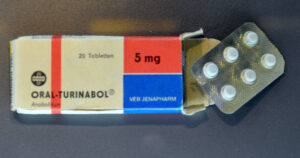
Turinabol oral

Turinabol (Turanabol) é um AAS semelhante em efeitos e estrutura química à metandrostenolona. Ao contrário do metano, o turinabol contém um átomo de cloro adicional no quarto átomo de carbono. Inicialmente foi desenvolvido pela empresa farmacêutica alemã Jenapharm e patenteado em 1961.

Perfil Turinabol

  • Propriedades anabólicas – 180%
  • Propriedades androgênicas – 50%
  • Conversão em estrogênio – não
  • Supressão HPTA – moderada-alta
  • Toxicidade hepática – moderada
  • Administração – comprimidos
  • Meia-vida – 16 horas
  • Tempo de detecção – até 250 dias (devido aos metabólitos solúveis em gordura de longa vida)

Concentração plasmática máxima 3 horas após a administração.

Descrição

A droga pode ser descrita como Metandrostenolona sem retenção de água.

É um esteróide de ação lenta. Durante o ciclo, o peso, a força e o alívio progridem muito lentamente, porém os resultados são impressionantes.

Outra característica da droga é a ausência de efeitos colaterais relacionados ao estrogênio, retenção de água, ginecomastia, etc.

Além disso, foi notado que a concentração de SHBG diminui, portanto os níveis de testosterona no sangue aumentam. Também há evidências de que o turinabol reduz o risco de coágulos sanguíneos nos vasos sanguíneos e no coração.

Ciclo

A dose regular com efeitos colaterais mínimos é de 20-40 mg/dia, que deve ser dividida em três porções. No entanto, os fisiculturistas muitas vezes negligenciam isso, elevando a dosagem para 100-150 mg por dia.

O medicamento pode ser usado tanto para ganho de massa muscular quanto para secagem. O ciclo de Turinabol não requer a inclusão de gonadotrofina (se não ultrapassar 6 a 8 semanas), porém a PCT é realizada com bloqueadores dos receptores de estrogênio (tamoxifeno).


O ciclo solo Turinabol é considerado um dos mais fáceis e seguros na musculação, por isso é frequentemente recomendado para iniciantes. Para o primeiro ciclo, a dosagem ideal é considerada 40 mg/dia durante 6 semanas. Isso permite obter resultados impressionantes, tanto em termos de ganho de massa muscular de alta qualidade, quanto no progresso dos resultados de velocidade-força.

Para ganhar massa muscular, um curso combinado de Turinabol (20 mg por dia) + enantato de testosterona 250 mg por semana (ou + sustanon) é mais adequado. A duração do ciclo é de 6 semanas. Primeiro, o enantato é cancelado e depois de uma semana o turinabol.

Atletas que não estão interessados em ganhar massa e se esforçam para aumentar a velocidade e a resistência (boxeadores, lutadores, corredores, etc.) recebem doses mais baixas – 10-20 mg por dia.

No entanto, deve-se lembrar que hoje o turinabol pode ser facilmente detectado em testes de doping devido aos metabólitos de longa vida que podem ser detectados dentro de seis a oito meses. Os últimos desenvolvimentos em cromatografia gasosa-espectrometria de massa contribuíram enormemente para este período de detecção incrivelmente longo.

Efeitos colaterais

Turinabol é um esteróide anabolizante 17-alquilado que permite administração oral, o que causa toxicidade hepática comparável à metandrostenolona. Em geral, os efeitos colaterais são bastante raros e estão mais frequentemente associados à duração muito longa do ciclo e a doses altas. Esta droga suprime fortemente a secreção de sua própria testosterona.

Teste qualitativo

A presença de halogênio (cloro) na molécula de turinabol permite detectar uma falsificação mesmo em casa. Existe um método qualitativo para a determinação de halogéneos numa amostra – o teste de Beilstein.

Para realizar o experimento, você precisará de um queimador de gás, fio de cobre e uma amostra para analisar. A amostra é moída até formar um pó homogêneo. Dobramos a ponta do fio de cobre, formando um laço, e mantemos na chama do queimador até que o tom esverdeado da chama desapareça. Em seguida, retiramos o fio da chama, colocamos uma amostra seca no laço e colocamos de volta na chama do queimador. Se ficar verde, a amostra é positiva.